The new chief of the defence staff has said that Britain is extending military assistance to Belgium following a series of alleged Russian drone intrusions into its airspace.
Sir Richard Knighton informed the BBC’s Sunday with Laura Kuenssberg that his Belgian colleague requested assistance earlier this week, and that equipment and staff were on their way.
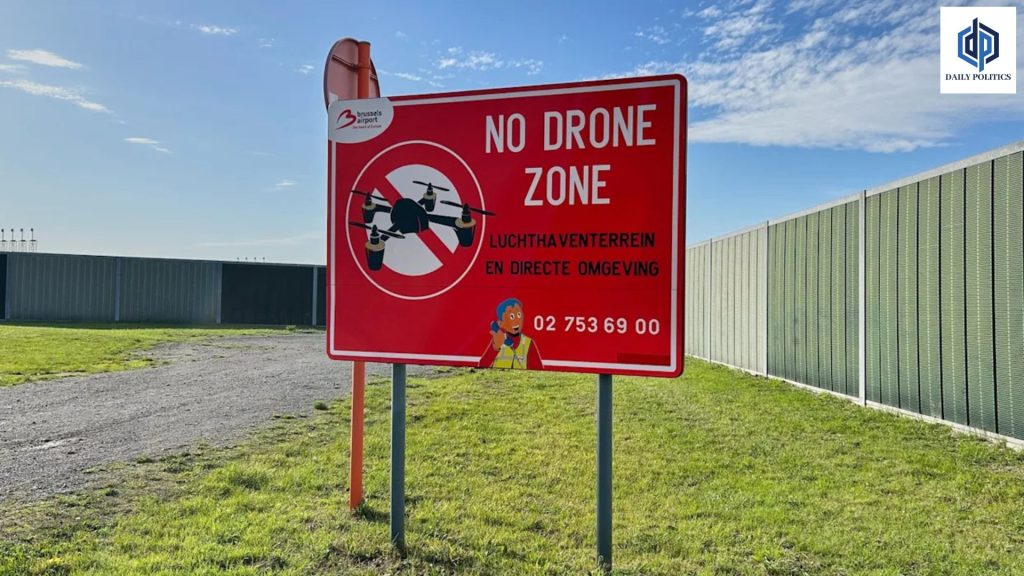
Belgium’s primary airport, Zaventem, was temporarily closed on Thursday night due to the sighting of drones in the vicinity. They were additionally observed in several areas, including a military installation.
Sir Richard stated that it was uncertain whether Russia conducted the intrusions, although he remarked that it was “plausible” they had been directed by Moscow.
Defence Secretary John Healey stated, “As hybrid threats escalate, our strength resides in our alliances and our collective determination to defend, deter, and safeguard our critical infrastructure and airspace.”
According to the media, members of the 2 Force Protection Wing, Royal Air Force, are likely to be deployed.
In conjunction with NATO allies, he stated that the UK will assist Belgium “by supplying our equipment and capabilities,” which he indicated were already being utilised. On Friday, the German defence ministry announced its intention to assist Belgium with anti-drone measures following a request from Brussels.
Approximately 3,000 Brussels Airlines passengers were impacted by the interruption, and the airline reported incurring “substantial costs” due to the cancellation or diversion of numerous flights.
German Defence Minister Boris Pistorius and Belgian security services have expressed suspicions towards Russia; nonetheless, Belgian Defence Minister Theo Francken has acknowledged the lack of supporting evidence.
“Initially, drones operating above our military installations were perceived as our issue,” Francken stated earlier this week.
“It has now emerged as a significant threat to civilian infrastructure in various European nations.”
Sir Richard stated that Russia currently represents “the most pressing threat” to Europe.
“The unlawful incursion into Ukraine has revealed the savage character of Russia’s military endeavors,” he stated on the program.
He stated that Russia has executed sabotage and assassinations on UK territory, and that the concept of hybrid warfare is an area where “we [The UK] must fortify ourselves”.
The shadow defence secretary endorsed the initiative, stating that there exists “a heightened threat environment” and that a crucial aspect of repelling threats is “collaborating with other nations through NATO.” James Cartlidge criticised the government’s strategy regarding the increase in defence expenditure, arguing that greater urgency is required.
In the spring, the government announced that defence expenditure would increase to 2.5% of GDP starting in April 2027, to achieve 3% in the subsequent parliament.
Sir Richard stated that the funding was “greater than anything I have encountered in my career.”
In recent months, numerous drone sightings have led to significant flight disruptions around Europe, particularly in Sweden, Norway, and Denmark.
Although several officials attribute the situation to Russia’s “hybrid warfare,” the Kremlin has refuted any participation.
Pistorius has proposed that the recent sightings may be linked to European Union deliberations over the use of frozen Russian assets to provide Ukraine with a €140 billion loan.
Although there is no public evidence of Russia’s involvement, suspicions have been heightened by significant airspace violations by Russia in Eastern Europe in recent months, which have included fighter jets and heavier attack drones.
The UK has recently deployed RAF Typhoon jets to participate in defence operations over Poland as part of NATO’s initiative to strengthen the eastern flank in reaction to incursions.