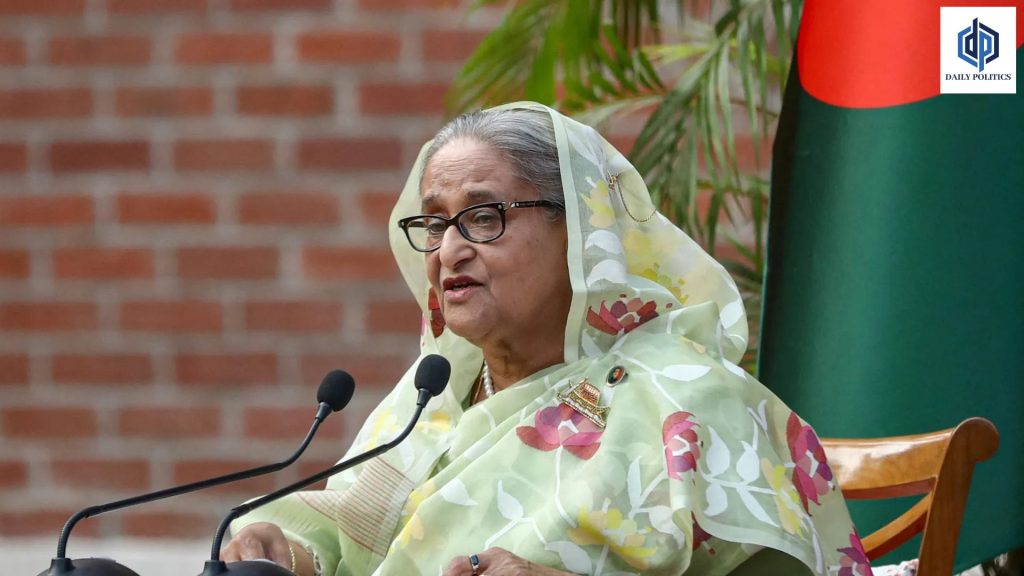
Former Prime Minister Sheikh Hasina has received a death sentence for two offences perpetrated during the July widespread upheaval.
The International Crimes Tribunal-1 issued its verdict today, Monday. This is the inaugural case concerning homicides and other crimes against humanity during the July insurrection.
The tribunal concluded that the offences committed by Sheikh Hasina and two other defendants have been substantiated. Sheikh Hasina has received a death sentence for two offences.
Among the two remaining defendants, the former Home Minister Asaduzzaman Khan was sentenced to death. In contrast, the former Inspector General of Police (IGP) Chowdhury Abdullah Al-Mamun received a five-year prison sentence.
Sheikh Hasina and the former Home Minister, Asaduzzaman, are evading capture and are currently in India.
Former IGP Chowdhury Abdullah Al-Mamun is the sole individual in detention and has provided testimony to the tribunal after acknowledging his involvement.
The three-member International Crimes Tribunal-1, presided over by Justice Golam Mortuza Mojumdar, issued the ruling in a crowded courtroom. The remaining members of the tribunal are Justice Md Shofiul Alam Mahmood and Judge Md Mohitul Haque Enam Chowdhury.
The proceedings commenced today, Monday, at approximately 12:30 PM. The 453-page ruling is split into six sections.
The tribunal provided evidence and information regarding Sheikh Hasina’s crimes against humanity, sourced from multiple recordings shot during the July revolt.
Throughout the hearings, accounts were provided regarding the audio, video, and additional evidence presented before the tribunal, alongside testimonies from victims and witnesses.
Video evidence was given demonstrating the lethal shooting fatalities of demonstrators at multiple areas, including Jatrabari, Rampura, Badda, Savar, Ashulia, and Rangpur in Dhaka.
Previously, excerpts from reports issued by several international organisations regarding human rights breaches during the uprising were shown. At approximately 1:15 PM, telephone calls between Sheikh Hasina and several individuals during the revolt were broadcast. A recent phone conversation between Sheikh Hasina and former Information Minister Hasanul Haq Inu was also disclosed.
Bangladesh Television transmitted the verdict announcement live from the courtroom of the International Crimes Tribunal-1.
Five charges were filed against the defendants. Delivering compelling speeches; Commanding the use of lethal force to subdue and eradicate demonstrators; Fatally shooting Abu Sayed, a student at Begum Rokeya University in Rangpur; fatally shooting six demonstrators in Dhaka’s Chankharpul region; and incinerating six individuals in Ashulia.
Previously, security measures were intensified in and around the International Crimes Tribunal in relation to the ruling of Sheikh Hasina, who was ousted after a public rebellion on 5 August 2024.
On Monday morning, personnel from the armed forces, police, the Rapid Action Battalion (RAB), and specialised units, such as the Armed Police Battalion (APBN), were extensively deployed across the tribunal compound and its vicinity. Armoured military vehicles were also present.
In the morning, Mir Mahbubur Rahman Snigdha—brother of the martyred Mir Mahfuzur Rahman Mugdha from the July mass uprising—arrived at the International Crimes Tribunal premises, accompanied by Dhaka University Central Students’ Union (DUCSU) Vice President Shadik Kayem, Inqilab Mancha spokesperson Sharif Osman Hadi, and several individuals injured during the July uprising.