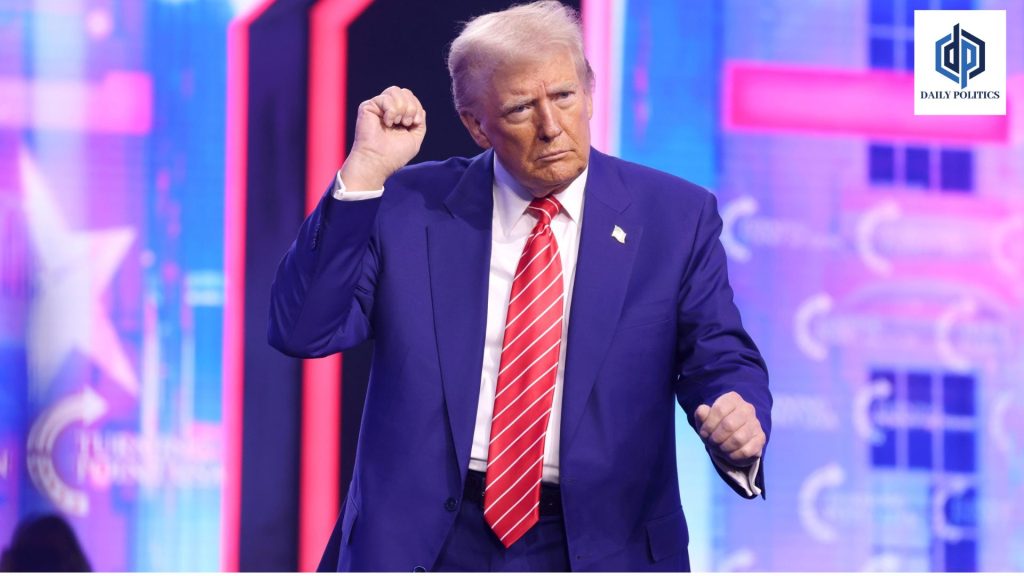
The second destination of President Donald Trump’s five-day Asian tour, his longest since taking office in January, was Japan on Monday.
He first attended the ASEAN meeting in Kuala Lumpur, Malaysia, when he signed a peace deal between Thailand and Cambodia.
The Kuala Lumpur Peace Accords, signed after Trump intervened in July to end the decades-long Thailand-Cambodia border dispute, were based on a ceasefire.
After signing the border pact, Trump hailed Thai Prime Minister Anutin Charnvirakul and Cambodian Prime Minister Hun Manet for their courage, saying the truce spared “millions of lives.”
“This is a momentous day for all the people of Southeast Asia as we sign a historic agreement to end the military conflict between Cambodia and Thailand,” he remarked.
Both countries reaffirmed their “unwavering commitment to peace and security,” agreed to demine their border, evacuate heavy armaments, and give ASEAN ceasefire monitor teams access.
Thailand released the 18 Cambodian soldiers it had kept since July.
Trump made reciprocal trade accords with Malaysia and Cambodia. Vietnam agreed to buy more US goods to lower its $123 billion (€106 billion) trade imbalance in 2024.
The US president left Malaysia for Japan on Monday. Sanae Takaichi, who became prime minister last week, hopes to reduce trade tensions by forging a personal relationship with Trump.
Trump said he would discuss the “great friendship” between the US and Japan in Tokyo aboard Air Force One on Monday.
Trump is garnering all the attention—why?
The Trump administration claims to have ended eight wars in eight months since taking office.
“We average one every month. Only one remains “Trump told the Kuala Lumpur summit.
Asia Human Rights and Labour Advocates’ head, Phil Robertson, thinks Trump is self-serving.
“Presiding over Thailand and Cambodia signing their accord is all about Trump continuing his narcissistic pursuit of next year’s Nobel Peace Prize,” he said.
Cambodia nominated Trump for the peace prize in July after he ended five days of deadly border confrontations.
Trump threatened to raise US export taxes to 49% to Thailand and Cambodia if the border problem was not resolved. A settlement reduced both countries’ payments to 19%.
“Both Thailand and Cambodia are hugely dependent on the American market for their exports, so there was really no chance they would refuse Trump’s demands that they hurry up and make peace, and actually sign an accord with Trump literally looking over their shoulders,” he said.
Pressure from trade
Trump aims to reduce US trade imbalances with major trading partners despite the US being the world’s largest economy. To raise tariffs, he has used executive orders.
This has strained Southeast Asian economies, said Singaporean political researcher Ian Chong to DW.
Trade—including transshipments—and tariffs are key US leverage. Global supply chains pass through Southeast Asian economies, “Chong. He stated that China imports minerals, such as nickel, from other countries to make products for the US market.
Southeast Asian states must find other ultimate markets due to US trade restrictions, which is difficult. Chong said this strains their economies.
The Office of the US Commerce Representative forecasts 2024 US-ASEAN trade at $475 billion. Southeast Asian economies depend on this two-way link.
Trump said his government attempted to prevent the Thai-Cambodia dispute from developing and was surprised by the timeline.
“Everybody was sort of amazed that we got it done so quickly,” he remarked.
Trump seeks regional support.
After Washington and Kuala Lumpur reached a reciprocal trade pact, Malaysian PM Anwar met with Trump.
Chong said regional governments want to stay on Trump’s good side and continue trade relationships with the US without China’s demands.
“Historically, the United States has helped maintain stability and easy access to the sea and air, which are also crucial to trade,” Chong told DW. Washington denies territorial disputes in Southeast Asia and has seen such access and stability as consistent with its economic and strategic interests.
Chong warned that “a less committed United States could create a destabilising power vacuum or force Southeast Asian states to accept PRC terms,” referring to China.
“Southeast Asian leaders may believe that engaging with President Trump directly may enable them to make their case, or at least avoid being shut off by the United States.”
Trump wants quick gains and an agreement with China, according to Thitinan Pongsudhirak, a political scientist and professor at Chulalongkorn University.
“ASEAN meetings are a sideshow to Trump,” remarked Thitinan.
He prefers swift wins to Southeast Asia’s plodding win-wins. Southeast Asian leaders must attend the working dinner at Trump’s ASEAN-US summit, he added.
“Japan and South Korea are bigger fish as Trump seeks US investment. But his meeting with President Xi will be the main event “Thitinan said.
“Unlike the Trump first term, China is ready to deal with the US measure for measure. Geoeconomic brinkmanship.”
Trump expressed optimism that he would reach a deal with Chinese President Xi Jinping on Thursday and was willing to prolong his trip to visit North Korean leader Kim Jong Un.
“I have a lot of respect for President Xi, and we will… come away with a deal,” Trump told Air Force One reporters.