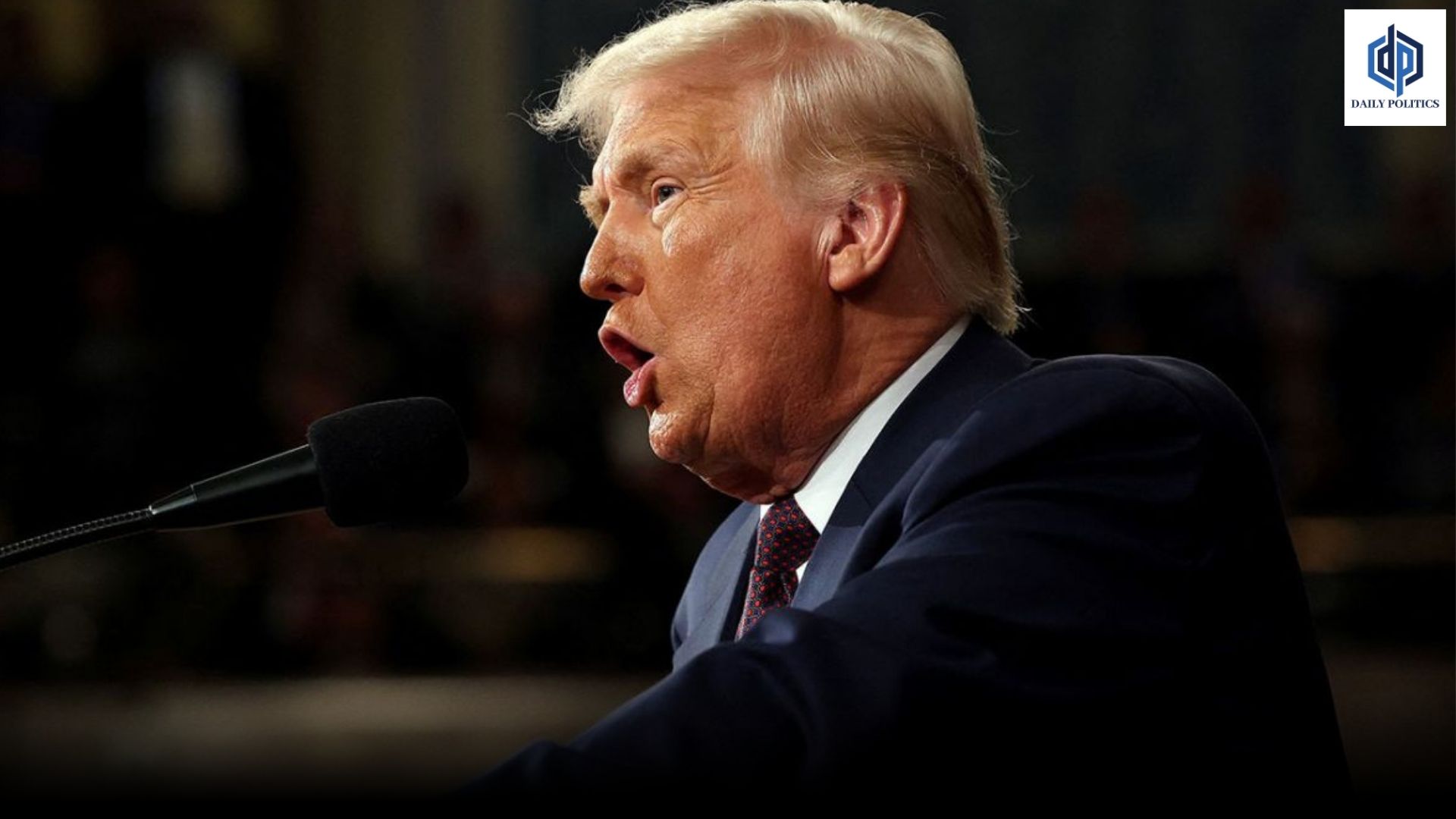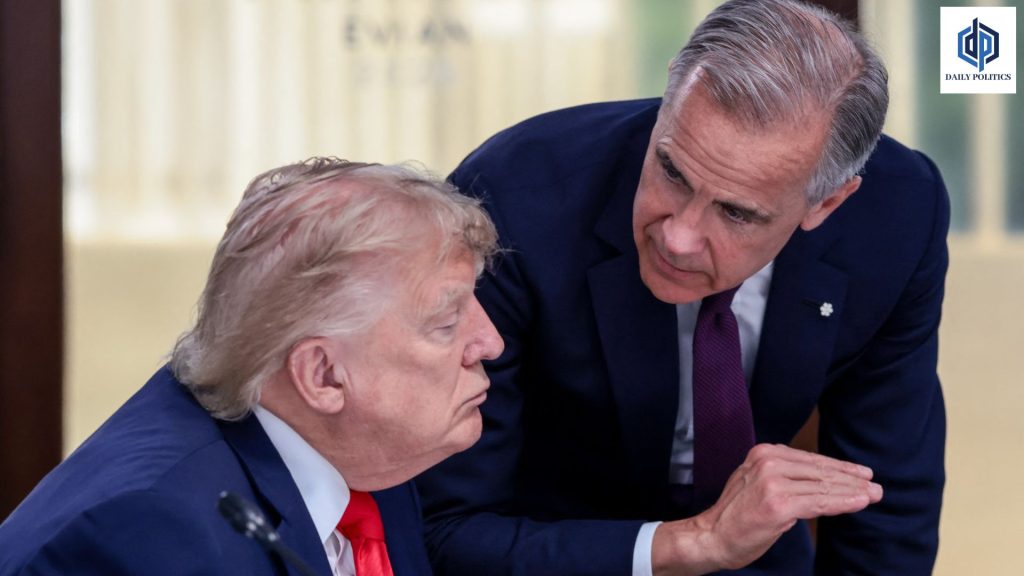
US President Donald Trump announced a 50% duty on a wide range of Canadian imports in retaliation for “unequal treatment” of US vehicles, dairy, and alcohol.
Wine, hockey sticks, and cement the targeted items include wine, hockey sticks, and cement. Exports of energy, potash, essential minerals, and fish will The government will spare exports of energy, potash, essential minerals, and fish.. The government will spare exports of energy, potash, essential minerals, and fish.
In response, Prime Minister Mark Carney said Canada would “intensify” trade talks with the US in the coming weeks.
The White House said the duties would start in 30 days. It significantly escalates trade tensions between North American neighbors.
Since Trump took office in January 2025 and unleashed a global tariff program, these tensions have simmered.
Companies importing foreign goods pay tariffs to the government.
Many of Trump’s global emergency tariffs were illegal, the US Supreme Court ruled earlier this year. But his Monday night action uses a different, obscure statute that has never been tried in court.
Canada, one of the US’s closest economic allies, was one of the few nations to retaliate against Trump’s tariffs last year.
It added a 25% charge to C$30bn (£16bn; $21.7bn) of US imports to Canada. Carney later dropped some.
The new tariffs applied regardless of whether the goods were covered under the USMCA, according to a Monday White House fact sheet.
The two nations’ trade obstacles the new levies strengthen the trade obstacles between the two nations. By the new levies.
The US charges 15%–50% tariffs on Canadian steel, aluminum, and copper. It taxes Canadian softwood timber at 35% and non-US car parts at 25%.
Canada imposes a 25% countertariff on American steel, aluminum, and auto imports.
Monday’s declaration follows President Trump’s warning to put tariffs on Canadian wildfire smoke drifting into US communities, but he has not stated the reason.
Canadians have begun to criticize Trump’s actions. The announcement follows a sequence of unilateral US trade steps that began with tariffs that violated the Canada-United States-Mexico Agreement, “X,” remarked Carney.
Trump’s repeated calls to make Canada the 51st US state may have prompted Carney to mention “threats to Canadian sovereignty.”
Doug Ford posted, X: “If these tariffs proceed, Canada should respond tariff for tariff, dollar for dollar.”
The BBC has contacted the White House and Canadian government for a response.
Trump names three trade grievances.
Three proclamations accompanied Trump’s tariff announcement.
These US complaints over trade issues previously known to Canada indicate a breakdown in trade negotiations. They involve vehicles, dairy, and booze.
Trump’s declaration said Canada taxes US motor vehicle and part imports not covered by USMCA.
He calls it “unreasonable” and claims Canada discriminates against the US by not charging other nations.
North American automaking is strongly interwoven between Canada, the US, and Mexico.
The US has struggled with dairy, particularly Canada’s supply management system, which restricts imports. Overages are charged up to 300%.
Finally, most Canadian provinces’ ban of US alcoholic beverages has been a big sore point for Americans since last year.
Canadian premiers have repeatedly maintained the boycott will be withdrawn if the US lifts tariffs on metals and cars.
Canadian trade negotiators want to decrease US tariffs.
Uncertain North American trade future
This year, the US announced it would not renew the USMCA.
Canada and Mexico want to renew the trade pact, but the US wants to amend it. Trump negotiated it during his first term.
Despite the US action, the deal will control North American commerce for the next decade, with annual reviews.
The US Supreme Court overturned Trump’s 1977 International Emergency Economic Powers Act (IEEPA) tariffs in February.
Trump cited IEEPA to impose tariffs on dozens of countries beyond America’s neighbors.
According to the Supreme Court, the president exceeded his authority by announcing the duties under a national emergency law.
At the time, the White House promised to pursue alternative methods to tax imports.
On Monday, Canada was targeted by levies under Section 338 of the 1930 Tariff Act, which concerns commercial discrimination rather than national emergency.
University of British Columbia economics professor Michael Devereux said the decision showed the Trump administration’s resistance to USMCA.
He told BBC News, “It is a significant escalation because it directly targets goods that were previously exempt under the US, Canada, and Mexico trade agreement that President Trump negotiated and signed himself in 2018.”
“I suspect it was a negotiation technique by the US leader,” said Devereux. “I would rather see this as just an impulsive move that came from kind of a grudge that the US government and President Trump have against Canada.”
Other analysts hoped the action would start new talks.
The Canadian Chamber of Commerce’s Candance Laing encouraged officials to make “meaningful progress” in talks before the additional levies entered effect in 30 days.
Head of the US Distilled Spirits Council, Chris Swonger, also urged both sides to find a solution, warning the decision “raises the risk of further retaliation.”